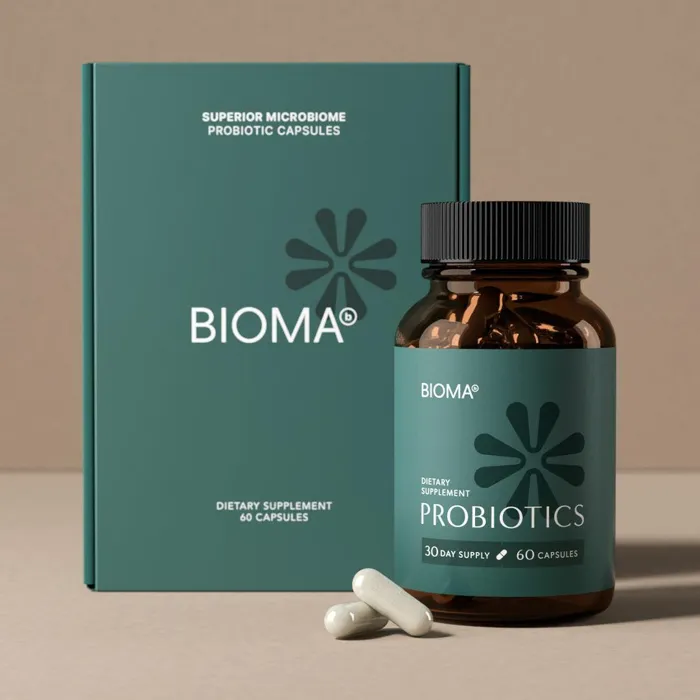
Probiotic
Bifidobacterium lactis
One of the most widely studied probiotic species. Research links it to more regular bowel movements and a healthier balance of bacteria in the large intestine.
Full strain disclosure
A clear, ingredient-by-ingredient look at Bioma's three-strain synbiotic formula — what each component does, how it fits into everyday digestive wellness, and what to realistically expect.
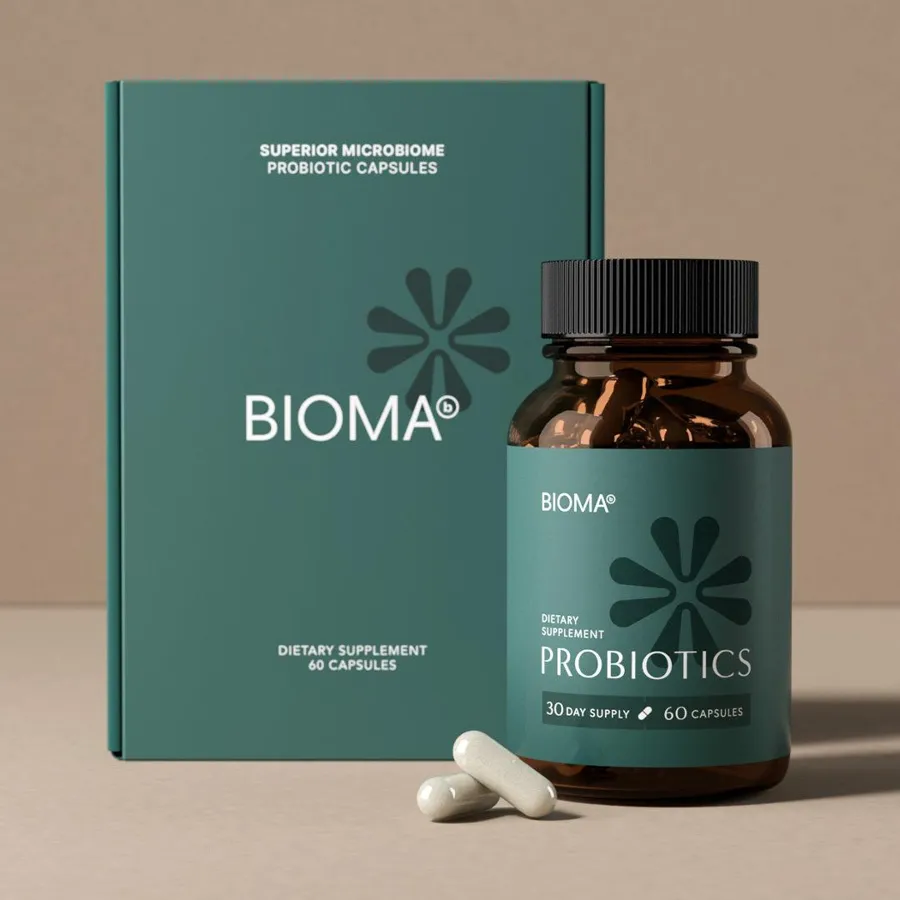
Inside the capsule
Rather than packing in dozens of strains, Bioma focuses on three well-researched Bifidobacteria and pairs them with a fiber that feeds them and a compound that nourishes the gut lining. The complete ingredient and strain list is published in full in this USA Today press release.
One of the most widely studied probiotic species. Research links it to more regular bowel movements and a healthier balance of bacteria in the large intestine.
A native resident of the human gut that helps break down complex carbohydrates and is associated with gut-barrier support and reduced occasional bloating.
Studied for its role in digestive comfort and metabolic health, including early research on body composition in adults.
A plant-derived fiber that feeds beneficial Bifidobacteria, helping the probiotic strains establish themselves rather than simply passing through.
A precursor to butyrate — the short-chain fatty acid colon cells use as fuel — included to support the lining of the gut.
Combining probiotics with the prebiotic they prefer is designed to help the strains survive, settle and stay active in the gut.
How it supports you
Rebalancing the microbiome
Diet, stress, travel and antibiotics can all shift the balance of gut bacteria. Bioma pairs three Bifidobacterium strains with a prebiotic that feeds them, an approach known as a synbiotic, aimed at helping beneficial bacteria take hold.
Everyday comfort after meals
Bifidobacteria help ferment fibers the body cannot digest on its own. Users of probiotics like these commonly look for relief from occasional gas, bloating and irregularity as their digestion settles into a steadier rhythm.
A supporting role, not a shortcut
Emerging research suggests the gut microbiome influences appetite signaling, energy harvest and metabolic health. A probiotic is best viewed as one supporting piece of a plan built on balanced eating, movement and sleep.
Getting started
Each bottle holds 60 capsules — a 30-day supply. Consistency matters more than timing, so build it into a routine you already have.
Follow the label directions — typically two capsules per day with water, ideally at the same time each day.
The microbiome changes gradually. Most people evaluate a probiotic over several weeks of daily use rather than days.
Vegetables, legumes, fruits and whole grains give beneficial bacteria more to work with and amplify the prebiotic effect.
Especially if you are pregnant, nursing, immunocompromised, or taking medication.
Bioma combines three probiotic strains — Bifidobacterium lactis, Bifidobacterium longum and Bifidobacterium breve — with xylooligosaccharides (XOS) as a prebiotic and tributyrin as a postbiotic. The company has published a full ingredient and strain disclosure for the formula.
Probiotics are live beneficial bacteria. Prebiotics are fibers that feed those bacteria. Postbiotics are beneficial compounds produced when bacteria ferment fiber, such as butyrate. Bioma includes one of each type.
Probiotics are not a weight-loss drug. Research into the gut microbiome and metabolism is promising, but any effect is modest and works best alongside healthy eating, regular activity and good sleep.
Experiences vary. Some people notice digestive changes within the first couple of weeks, while others take longer. Consistent daily use over at least a month gives a fairer picture.
Probiotics are generally well tolerated. Some people experience mild gas or bloating in the first days as the gut adjusts. Stop use and consult a healthcare provider if you experience any adverse reaction.
Bioma has published the full breakdown of its three-strain probiotic formula. See the original announcement for every ingredient in the capsule.
Bioma Probiotics Reviews on USA Today